
From a Booker winner to a nineteenth-century vision of a future socialist utopia, here’s a roundup of the books I read this month.
I took a long road trip across Europe in June and listened to some good audiobooks, as well as the books I read on Kindle or paper. Here’s a summary of what I would and would not recommend.
News From Nowhere by William Morris
A man falls asleep in 1890s London and wakes up in a socialist utopia of the future. Although it’s described as a novel, it’s really more of a political tract with a loose fictional framing. Morris’s goal is to explore how British society could function without money and private property.
I found it interesting that Morris’s vision of the future looks a lot like the past, with smaller communities living simpler lives and showing more respect for the environment. People actually enjoy work because they are producing things they and their neighbours need, and they make them as beautiful as they can. So it’s a craft-based future in which people don’t see the point of turning everything over to machines.
Taiwan Travelogue by Yang Shuang-zi
This year’s International Booker Prize winner is an English translation of a Chinese novel that is itself billed as a translation of an earlier Japanese novel set in 1930s Taiwan. It’s a beautiful and delicate portrait of a relationship that is forbidden for two reasons: firstly because it’s between a representative of the Japanese colonisers and a supposedly inferior native Taiwanese islander, and secondly because it’s between two women. I can see why this won the Booker and want to write more about it soon.
The Things We Never Say by Elizabeth Strout
Elizabeth Strout’s novels have been a mainstay of previous European road trips, and I listened to her latest one as I drove through eastern Europe and across the Alps to Basel for this year’s art fair.
The Things We Never Say shows us the ordinary life of schoolteacher Artie Dam and then gradually reveals all the unspoken details in the lives of Artie and those around him, from existential angst and suicidal thoughts to long-held secrets and betrayals. Like Strout’s other books, it skims along like a simple, well-told story but also leaves you thinking quite deeply about its themes—in this case, the distancing effect of those secrets on friendships and relationships, how every retreat from honesty makes it harder to achieve true connection.
Kin by Tayari Jones
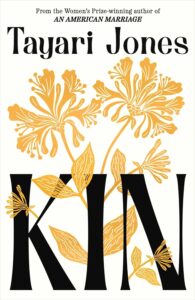
My road trip listening also yielded a new entry in a category every reader will recognise: books that everyone raves about but that leave you cold. Kin has a wonderful premise, tracing the trajectories of two motherless babies as they grow into adult Black women in the 1950s American South. While Niecy tries to fill the void left by her dead mother, Annie is desperate to find out why her mother abandoned her.
It should work well, and yet I found that we spend too long in side-plots and not enough time on what mattered. And there were several occasions when the characters behaved in such bizarre ways that it broke the fictional spell and made disbelief very difficult to suspend.
East Wind: West Wind by Pearl S. Buck
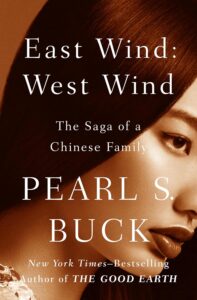
For a recent Wall Street Journal story I wrote about entertainment in the Great Depression, I interviewed English professor Peter Conn, and he was so enthusiastic about Pearl Buck that I decided to try her work for the first time.
East Wind: West Wind tells the story of a generational clash between Chinese traditions and Western influence. It reminded me of later post-colonial literature in that way, and it was quite even-handed in helping me sympathise both with the characters who wanted to embrace modernity and those who valued tradition. I enjoyed it, although I didn’t love it as much as I expected to, and I plan to read more by Buck, who I find gets quite scant attention given her status as the first American woman to win the Nobel Prize in Literature.
The Starmer Project: A Journey to the Right by Oliver Eagleton
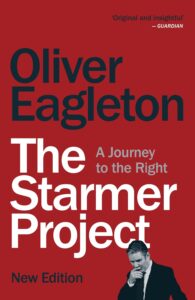
I downloaded this book on my Kindle but kept finding myself so consumed with loathing for the man that I was unable to read it without feeling sick. Now that Starmer’s odious political career has finally ended, I was able to read it with more equanimity, seeing it as a retrospective story of how a man can abandon every single principle he might ever have possessed in blind pursuit of power and then, when he has achieved his goal, find himself having absolutely no idea what to do with it.
For those of you outside the UK, the specifics of the tale will have less resonance, but the overall trajectory may give you an interesting perspective on your own set of invertebrate, focus-group-obsessed, centre-left hypocrites.
How was your reading month?
I hope you’ve read some good books this month. Let me know in the comments which ones you’d recommend (or not), or tell me your thoughts on the books I’ve highlighted above.
There are 18 comments
The first two look really interesting and I’ve not heard of them. I just checked out Kim from the library but honestly, I’ve read enough reviews that I’m not sure I’m going to pick it up. Too many others I want to read. I like all of Elizabeth Strout’s books so this one is on my to read list as well. Next up for me will be Maggie O’Farrell’s new book, Land and then Anne Patchett’s new book, Whistler. Right now I’m in the middle of Jane Eyre, a classic I somehow missed.
Very nice reading plans! I liked After You’d Gone and want to read more by Maggie O’Farrell, so I’ll be interested to hear how you liked Land. Whistler sounds good too – just read an excellent review of it over at Tales from the Reading Room: https://litlove.wordpress.com/2026/06/22/whistler-by-ann-patchett/
I always enjoy seeing your reading. It’s a shame about Kin, which I have as a 99p Kindle book (they are good for trying something new) but good news about Elizabeth Strout which I will definitely read, and Taiwan Travelogue which I definitely might read! Hope the trip was really enjoyable.
I am a 99p Kindle addict too! I’m no fan of Amazon and prefer paper to ebooks, but I’ve discovered a lot of good books through those 99p offers, and the ones that don’t work out somehow don’t sting so much. I’m definitely in the minority when it comes to Kin, so do give it a try.
I enjoyed reading your month of reading. News From Nowhere intrigues me, and I am still to get to Elizabeth Strout books. Olive Kitteridge is the one on my TBR list. And, your article also sounds fascinating. It is certainly interesting how entertainment thrives in times of hardship. It reminds me also of Hollywood of the late 1940s. Europe in ruins, and yet, what was one of the most successful Hollywood years in the 1940s? 1944, 1945? with such classics films as Spellbound, Leave Her to Heaven, The Lost Weekend, Laura, etc. The paradox. Perhaps the only indication that things were not exactly “bright” was the tilt to film noir in the US.
Thanks, Diana! Yes, a lot of it was escapism. Surprisingly little of the entertainment of the era actually covered the hardship of the Great Depression, The Grapes of Wrath being a notable exception. In general, when people were suffering so much on a daily basis, they want to pay 25 cents to sit in the cinema and be transported to somewhere better. Conversely, in more recent times of relative prosperity, disasters and dystopias have been very popular. Here’s a link to the article if you’re interested: https://www.wsj.com/arts-culture/hollywood-great-depression-us-economy-escapism-a60e3433?st=dojho6&reflink=desktopwebshare_permalink
Thanks very much for the link to your article – very perceptive and interesting. Yes, I see now how you are so right to say that people were transported to different times in their cinema seats during the Depression and, of course, they wanted to, so there were fantasy films, screwball comedies, cowboy films (Stagecoach), and well historical epics like Gone with the Wind and Robin Hood. Perhaps for this reason also my favourite films of the 1930s are not even American, but German (M), French (The Rules of the Game, La Grande Illusion, There’s No Tomorrow) and British (Pygmalion). Europe grappled with realism.
And, now that I think about it, wouldn’t you say that perhaps only Chaplin films got closer to the Depression era real thinking among the ordinary people because in those films the audience basically identified with a tramp – Modern Times/City Lights? who actually does go through the Depression era experience but this is again presented to us with much humour to provide a version of psychotherapy for the audience? And look at another of my favourite film of that decade – Trouble in Paradise (1932) – there we are siding, and sympathising with a thief and a lady pickpocket who are the main characters! I think that’s also very interesting and telling. The only other very major film that comes to my mind that deals with the tragedy of existence in America of that time is Make Way for Tomorrow (1937). There, we have two elderly people who lose their home and unable to find employment because of their age. They soon find out that none of their children want them in their homes either.
Hey Diana, great point about Chaplin. Yes, I think you’re absolutely right about that – it was a way to deal with the realities of the Depression in a sidelong way, through comedy and laughter, and siding with the underdog ties in with some of what the sources in my WSJ story were talking about with the gangster films and other examples.
Make Way for Tomorrow is a great example of dealing with the tragedy head on. I haven’t seen it, but I remember one of the people I interviewed talked about it, and it does seem like a real tear-jerker. I’ll have to look it up. And I might rewatch some of those other movies you mentioned too 🙂
It’s always enjoyable to see what you’ve been reading, Andrew. When it comes to Elizabeth Strout, I’ve only read Olive Kitteridge and Olive, Again, but they’ve stayed with me over the years. She writes about complicated characters, particularly their failings, so well. Is this new one a standalone novel or part of the Lucy Barton universe? I think it’s the former, which would make it very appealing.
This is a standalone novel – all new characters, and no references to her previous novels that I could pick up. Her last one, Tell Me Everything, brought pretty much all of her earlier characters together and felt a bit like a farewell to that whole sequence, and this one is a fresh start. Well, at least in terms of characters and plot – the style is pretty much the same.
I haven’t read any of your books (though some sound quite interesting) except for East Wing: West Wing, a long long time ago. I’ve loved Pearl S. Buck since my teens, so about half a century ago.
https://momobookblog.blogspot.com/2012/10/buck-pearl-s-east-wind-west-wind.html
One of my absolute favourites of her is Peony, though her Good Earth trilogy is also absolutely fantastic.
Thanks for the recommendations, Marianne! I enjoyed your review of East Wind: West Wind – sorry that I can’t comment on your site because I don’t have a working Google account. Didn’t you have an option before to comment without a Google account, like with a name and URL?
June was a good month! I am intrigued by News From Nowhere since folks interested in climate and post-capitalist economics talk about how we need to have smaller communities and simpler lives.
I’m on the long library waitlist for Taiwan Travelogue so I am glad to hear you enjoyed it–my wait will be worth it! Though sad to hear about Kin. It’s on my TBR and has gotten so much buzz and it genuinely sounds good. Disappointing to hear it doesn’t quite live up to the hype.
Yes! I liked the idea of a nostalgic utopia instead of some tech-driven vision. We do need to get clear about how we can live differently, and although News From Nowhere is not a perfect prescription, it does give some interesting food for thought.
Hope you enjoy Taiwan Travelogue as much as I did, and Kin much more than I did 🙂
What a great month overall! I’ve not read the new Tayari Jones novel, but my favourite of hers remains her first. I think what I love is that she’s telling these stories and that, for so many readers, they are compelling and engaging and nuanced, and I know she tells them well, but… they just aren’t a perfect match for me either. Over the years, I’ve been gathering up a little stack of Pearl S. Buck novels (I’ve read two, but I would have to check my log for which ones… I regularly remember them wrong, probably because some of the titles are just so familiar by now because others have loved them). What a great topic for an article, too (and a fascinating era).
Somehow Pearl S. Buck is one of those writers that just passed me by – I’d heard the name, of course, but didn’t know anything about her and was surprised to discover that she’d won the Nobel. I wonder if she’s less well known in Europe than in the Americas, or if she’s well known here and I just personally missed out. Would love to know which ones you read if you can dig out those logs without too much trouble.
That’s an interesting question; my guess is that she’s not very well known in either place now. Ten or fiteen years ago, Open Media bought up a tonne of her novels (as they did with Mavis Gallant’s stuff, which is why I noticed), and I got a few epubs (when I was reading epubs). But I grew up seeing her paperbacks everywhere second-hand, but never knowing anyone who read them. The only one I know for sure I’ve read is The Good Earth, which is the most famous, and I always meant to reread it because I didn’t know then that it’s a series. (Sons, A House Divided finish the trilogy.) I have that one, and these in print: Peony, The Mother, and one of her American novels, Voices in the House, which I bought for the sassy blurb about a dangerous and provocative heroine. Are you thinking of trying another, or just generally curious about her as an author?
I am thinking of trying another, but am also generally curious about why a Nobel Prize winner (and the first American woman to win) is not better known. Then again, looking at the list of laureates, it’s quite uneven—some names on there are still well known, and others are not. Buck is sandwiched between Roger Martin du Gard and Frans Eemil Sillanpää, neither of whom is setting the literary world on fire right now! And then there are plenty of writers you’d think would have won but didn’t (e.g. Joyce, Woolf, Proust). I suppose history’s judgment is often different from contemporary views. I wonder which of today’s writers will stand the test of time, and which will be the next Frans Eemil Sillanpää.