Archive

Posts Tagged ‘novels’

British “state of the nation” novels

February 5th, 2010

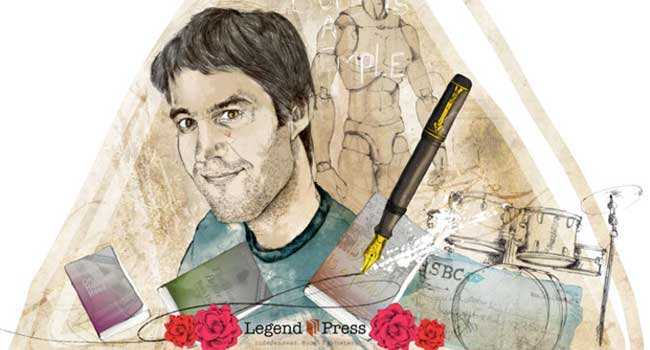
One of my fellow Legend Press authors, Mark Piggott, wrote an interesting article in the Independent about ’state of the nation’ novels. I thought it would be complaining that nobody’s writing about contemporary British issues these days – there’s been quite a bit of that recently, because historical novels have been getting a lot of the awards and attention lately. But he takes a more interesting line, noting that historical novels have been getting the attention, but pointing out the wealth of books tackling contemporary issues (of which mine is listed as one, although that’s not the only reason I liked the article!).

Piggott also explores the difficulty of writing a ’state of the nation’ novel, getting good quotes from some major British literary figures. Martin Amis thinks it’s down to a lack of national pride – the US now produces more state of the nation novels, because it’s the centre of the earth; British novelists are more like dissidents. Toby Litt says that writers are trying it, but in a “more focused” way – “they don’t do sweep, they do stab.” Piggott also makes the point that sometimes it’s new arrivals who most effectively hold a mirror up to British society, and so the place to look is more on the margins than on the Booker Prize shortlist.

Anyway, as someone who aspires to describe at least a part of the state of the nation in his writing, I thought it was a good exploration of the difficulties and possibilities of doing this, and also a guide to some of the more interesting names in British literature.

Andrew Blackman Literary news , , , , ,

“An Artist of the Floating World” by Kazuo Ishiguro

February 14th, 2009

floating-worldAn elderly, celebrated artist, Masuji Ono, is living in retirement in Japan just after the end of World War Two. His daughter is having trouble in her marriage negotiations for reasons he can’t understand: gradually he realises it’s because he is associated with the rise of Japanese militarism in the 1930s, a period now discredited and blamed for bringing disaster on the country.

The theme of the book is the role of the artist in the world, and this is what old Masuji Ono gradually explores. As with many of Ishiguro’s books, memory plays a large role. Ono thinks back to his apprenticeship with an artist who devoted his life to paintings of the city’s night life, the “floating world” of the title, temporary and transient. Ono follows him initially, but then wants to do something more meaningful with his life and his art, and reacts against this decadence with his first rebellious painting “Complacency”, later reworked as “Eyes to the Horizon”, a propaganda painting used to exhort the country to go west into Asia. His motivations were good, though – his friend Matsuda showed him the poverty in the city and said that the only way to stop the people’s suffering was to make Japan into a great empire like that of the European nations. It was the wrong course, but as Matsuda says as an old man, “There’s no need to blame ourselves unduly. We at least acted on what we believed and did our utmost. It’s just that in the end, we turned out to be ordinary men. Ordinary men with no special gifts of insight. It was simply our misfortune to have been ordinary men during such times.” Or as Ono says, “Of course, we took some bold steps and often did things with much single-mindedness; but this is surely preferable to never putting one’s convictions to the test, for lack of will or courage.” This is contrasted with a character called The Tortoise, a slow imitator: “His kind do not know what it is to risk everything in the endeeavour to rise above the mediocre.”

Clearly we are meant to sympathise with Ono, even though he made the wrong choices. Ishiguro seems to be saying that an artist has to choose, cannot simply ignore life and paint pretty pictures. But by making public choices of allegiance, you lay yourself open to criticism and even ruin when times change. What is patriotic in one situation can come to seem treasonous or murderous in the light of later events.

Andrew Blackman Book reviews , , , ,

“A Pale View of Hills” by Kazuo Ishiguro

December 28th, 2008

Most of this novel is memory: a woman thinking about her daughter’s suicide and remembering an earlier summer in post-War Nagasaki. Almost nothing haPale View of Hillsppens in the present day. The whole story takes place in the past.

And the story in the past is full of holes. At first this annoyed me but, the more I thought about it, the more I realised how true this is to the story as the woman would have thought about it. Not only are our memories full of holes, but there are also plenty of things we simply don’t want to think about, either because they are too painful (the suicide) or simply because they are obvious to us as we know them already. This is why a lot of things a reader would want to know, for example how the woman ended up leaving her first husband and going from Japan to England, are left virtually untouched. We might want to know, but it’s not where this woman’s mind is going. She’s interested in a seemingly unimportant episode, a fairly brief friendship a long time ago with a woman called Sachiko and her small daughter Mariko. Gradually we realise that the woman is thinking about them as a way of drawing parallels with her own life and understanding her relationship with her daughter. Sachiko just wants to escape from Nagasaki, where the Bomb dropped, where so many died and the survivors are living in tough conditions, and she’ll do anything to get out, even though she knows she is being a bad mother to Mariko.

The guilt comes across gradually, indirectly, but this is all we can expect from an emotionally repressed character, one who states at the outset: “I have no great wish to dwell on Keiko [her daughter] now, it brings me little comfort.”

The writing style is beautiful, restrained, and Ishiguro is particularly good at making things clear without making them obvious, for example a character is saying they are happy, they couldn’t be happier, and yet although there are no overt sings of it, we know they are lying. There are also ideas here that will be developed at greater length in his later novels, for example the old man who is rejected by the younger generation, which became the theme of “An Artist of the Floating World”.

I’ve read all but one of Ishiguro’s novels now and enjoyed all of them. His writing is a little bit similar in all of them, though – even though they are first-person narrators in wildly different settings, they all sound like the same person somehow. But the stories are compelling enough, and the writing beautiful enough, for this not to matter really.

Andrew Blackman Book reviews , , , , ,

“To have and have not” by Ernest Hemingway

December 19th, 2008

The original New York Times review  in 1937 put it this way:

Mr. Hemingway has been for some years an outstanding figure in American literature; he has influenced greatly men a little younger than himself, and they have paid him the tribute of imitation. Whatever he does is of interest because he has, unquestionably, a very real talent. What has he done with it in “To Have and Have Not”?

It’s a good question, and one that hasn’t really been answered in the 70 years since then. Some have said Hemingway hated the book himself and only wrote it to fulfil some kind of contractual obligation. But how could he be contractually obliged to write an awful book? Even if somebody did set the subject matter, surely he could have produced something better than this?

The main problem with the book is that it is schizophrenic. It’s a cross between an adolescent high-seas adventure story and a social analysis of the effects of the Great Depression. Even if both could be crammed into one book, it’s probably safe to say that fans of one genre are unlikely to be fans of the other.

The writing style, too, is schizophrenic, lurching from first person to third person, from one character’s point of view to another’s. Harry Morgan’s character, too, changes. He starts out as a hard-drinking, hard-fighting Hemingway hero, but later on, as the whole idea of the book seems to change midstream, he becomes more of a Steinbeck-style poor old victim of the system. His wife and children then appear in the book, looking as if they have been grafted on to make him appear more sympathetic. Then rich people start to appear, being vile and self-obsessed but never fully drawn as characters. Their only role appears to be to act as “haves” to contrast against the “have nots”.

Another major problem I had with the book was its racism. You could argue that Hemingway was showing his characters to be racist, but still the constant, overwhelming use of words like “nigger” and “chink” really shocked me and immediately put me off the book. And worse than the words themselves were the way the characters of other races were described as objects more than people, with no characters beyond crude racial stereotypes like lazy blacks and untrustworthy Chinese. They are hardly ever even given names, but just referred to by their race: “the [insert racial slur] said….”

Well, I suppose every good writer has a clunker. I still like Hemingway’s writing, particularly in For Whom the Bell Tolls. So this book did teach me one thing: don’t judge an author by one book alone. If this had been my first Hemingway book, I’d probably never have read another, and as a result I’d have missed out on some fantastic writing.

Andrew Blackman Book reviews , , ,