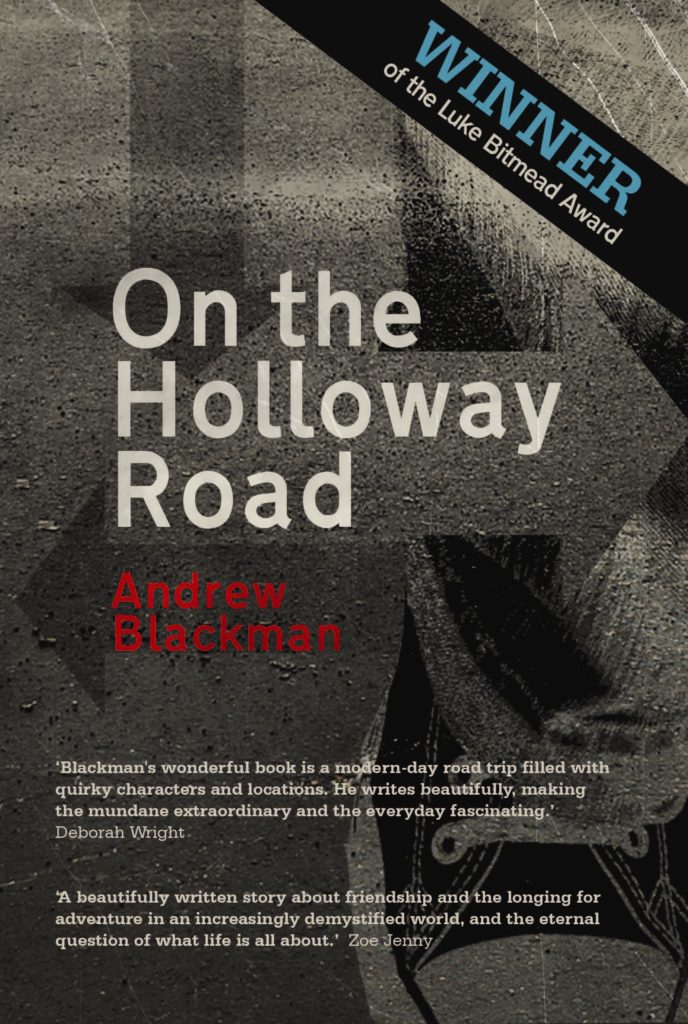
.... On the Holloway Road is now available as an eBook ....

Finding the ‘Lost Booker’

February 20th, 2010

So it seems that due to a procedural anomaly, a whole year’s worth of novels missed out on being considered for the Booker Prize. This is being remedied by a retroactive award, with a shortlist of novels from 1970 being drawn up by three judges and then a public vote to decide the winner.

I think this is interesting – partly for a window onto a year’s writing (lots of names I recognise, but not a single book I’ve read), but also for raising questions of how we judge literature. I bet that a lot of people, like me, haven’t read any of the books, and probably won’t have read them before the votes are cast. So what will the votes be based on? Names, probably – liking other Ruth Rendell novels so assuming this one was probably good. Or perhaps they’ve read one, and will vote for that one. I’d imagine that the number of people who have read every book on the shortlist and can choose between them all on an equal basis is very small. It’s different from previous public votes, like the Best of the Booker, where you were voting for a range of high-profile books across 40 years, and there was a better chance of having actually read them. So it will be interesting to see how it works out. The choice will almost certainly be different from what it would have been had the prize actually been awarded in 1970 through the usual process.

I am happy of course for the writers too, to get some long-overdue recognition. I do feel a little sorry for those who experienced the excitement of seeing their name on the shortlist, allowed their thoughts to wander to how they would spend the £50,000 cheque that a Booker winner receives, and then saw this at the bottom of the announcement: “The winner of the Lost Man Booker Prize will receive a designer bound copy of their novel.” Hmm. Giving someone a copy of their own book is not the best prize in the world. It’s certainly not £50,000. But I suppose the real prize is the recognition, and also the nice boost to royalties from readers rediscovering your work.

Andrew Blackman Literary news ,

“On the Holloway Road” published as an eBook

February 18th, 2010

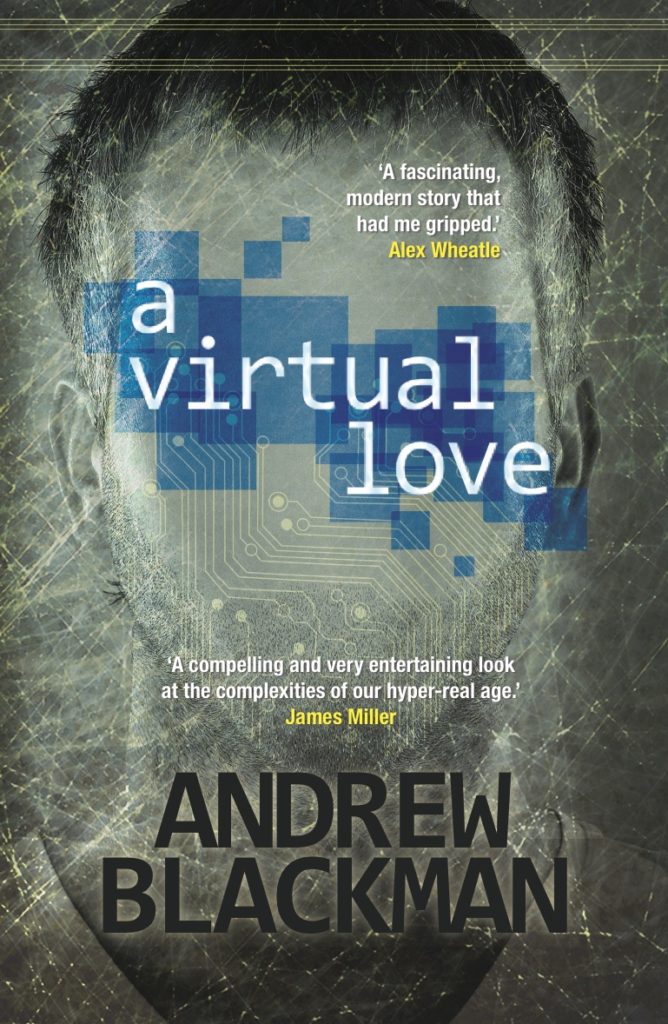
I’m a bit behind the times – this actually happened at the end of last year. But wanted to let you know that my debut novel On the Holloway Road has been digitised and is available as an eBook download, for those of you who are into such things.

Personally I prefer the feel of a physical book, although I suspect I’ll be convinced of the merits of electronics readers one day. I certainly like the idea of being able to search an electronic book and instantly find a passage I’m looking for, rather than leafing through page after page trying to find it. Anybody out there tried a Kindle or a Sony reader or any of the others? What are the major benefits?

Andrew Blackman On the Holloway Road ,

Google Adwords?

February 17th, 2010

I got a voucher recently for £75 of free advertising on Google Adwords. I wasn’t really planning to use it, because I think Adwords is quite expensive for someone like me. I don’t exactly do a “hard sell” on this website, so even if I get extra traffic, probably only a small percentage would actually buy my book. I can’t really see how I’d make back my money (apart from of course during the free period, which only lasts a few weeks).

But I just thought I’d ask if anyone has experience of using Adwords, and if it might be useful for me after all? Do let me know if you think I’m missing out.

Andrew Blackman Interesting snippets

“West Indian Folk Tales” retold by Philip Sherlock

February 16th, 2010

What struck me about these stories is the similarity between traditional folk tales in different parts of the world. I grew up, of course, with British or European stories, whereas these stories are either of Carib or African origin. Yet many of them sounded familiar, not in the specifics but in the general themes — explaining the world and how things came to be the way they are, through stories with animals as characters illustrating different aspects of human behaviour.

What was also interesting about these stories was that the moral was not always clear. The spider Anansi figures heavily in the African-origin stories, and he often tricks the other animals or acts selfishly, taking advantage of their generosity or trust. Sometimes this works out, and sometimes it doesn’t. The outcome wasn’t as predictable as I’d expected it to be.

The first few stories are from the Carib people, the pre-Columbian inhabitants of the Caribbean who gave the region its name but suffered heavily under European colonisation and are now very few in number. They explain the origins of the people, saying they used to live on the moon but saw in the bright procession of worlds around them there was one that looked dull and needed cleaning. So they went down to Earth on cloud chariots to clean it, but got stuck here when the cloud chariots broke loose and floated away. They cried out to Kabo Tano ( the ‘Ancient One’) for help, and he gave them a huge Coomacka Tree with all kinds of fruit and vegetable. Then he ordered them to cut it down, and each one took cuttings from it. “And so, to this day, every Carib has food close to his dwelling.” Then there are stories to explain the animals, for example how the sun-spirit Arawidi created the dog as a companion for humans, molding it out of fish. The part he held in his hand became the nose, and that’s why every dog has a cold nose.

Then the majority of the stories are those the enslaved Africans brought with them to the West Indies from their homelands. Many of them are originally Ashanti tales – in the West African language Twi, the word for spider is “ananse”. The characters in these stories are animals, but with human characteristics, for example living in houses, wearing clothes, talking, paying each other money. Anansi the spider, the central character, is often greedy and selfish, scheming to outwit the other animals, but is portrayed sympathetically – as the weakest animal, he can’t compete physically with the tigers etc, so has to use his wits.

One interesting parallel with the Carib stories was the trajectory of all the animals living together as friends at first, before pulling apart and becoming enemies as a result of some trick. For example in the Carib stories, the reason man needed the dog as a companion was that all the other animals had deserted him after times were hard and he started hunting them to stave off his hunger. In the African stories, Anansi and Tiger used to be friends, but Anansi stole Tiger’s lunch one day and so Tiger retreated deep into the bush and Anansi hid in a tree, safe in his web.

I would be interested to know how this book was put together – what the original sources were, and how much the modern-day author Philip Sherlock adapted them. It was always a question in my mind, particularly when I saw striking parallels with other cultures. For example the character of the Wise Owl appears in both the African and Carib stories, and is of course also familiar from European stories. It’s quite amazing that people in three different corners of the world should see an owl in the same way – reminds me of the parallels I’m seeing in “The Golden Bough”, a massive compilation of myths and traditional beliefs from around the world that I’m reading gradually over several months. For me, this was the most interesting part of these stories. I enjoyed them for themselves and their characters too, but mostly for the unexpected feeling of deep familiarity.
Andrew Blackman Book reviews , ,

Monday morning inspiration

February 15th, 2010

“Let our imagination guide us – and never cease to follow it, for if we do, we grow up and the child inside us is no more.”

- seen in Starbuck’s, Muswell Hill

Andrew Blackman Inspiration

Reading 8 or 9 hours a day

February 13th, 2010

George Lamming also said something quite amazing in his speech, and I forgot to mention it in my last post. He mentioned that he reads for 8 or 9 hours a day, and has done throughout his life. If he doesn’t read that much, he feels – I forget the word he used, but basically unsatisfied, hungry for more.

After the speech, I said how wonderful it would be to read so much – you’d have such an encyclopaedic knowledge of world literature and presumably a lot of other topics. But my wife disagreed – she said that reading so much wouldn’t leave you any time for other things, like travelling, learning a language, spending time with family, going for walks, etc etc. She said you’d live in a world of books, not in the real world.

I suppose because I’ve always been busy in my life and never felt as if I had enough time to read as much as I wanted to, the idea of reading 8 or 9 hours a day was enticing. But the more I thought about it, the more I saw the value in my wife’s counter-argument. Time spent reading is time not spent doing other very valuable things.

What do you think? In an ideal world, where your lifestyle allowed you to read 8 or 9 hours a day, would you do it? If not, what would be the right amount for you? How does that compare with how much you read right now?

Andrew Blackman Literary events , ,

George Lamming on “The politics of reading”

February 9th, 2010

While I was in Barbados over Christmas and New Year, I went to a literary event – the 12th annual award ceremony for the Frank Collymore Literary Endowment, on Saturday 9 January 2010. The keynote speaker was George Lamming, probably Barbados’s best-known writer. He gave a fascinating speech on the politics of reading, which I am finally getting around to writing about!

First he made it clear what he meant by politics. In Barbados, when you say someone’s being “political” it generally seems to mean they are blindly following one of the two main parties, the Barbados Labour Party or the Democatic Labour Party. Lamming asked his audience to imagine that parties didn’t exist, and to think about politics instead as being about “social relations and negotiating the distribution of power”.

Next he turned to reading, saying “reading is like eating” and books are food. What you consume affects you, and just as eating salad or junk food affects your body, reading shapes your consciousness and the way you relate to the world. So by his definition of politics, it’s clear that “reading is a political act”.

His frame of reference for the main part of his talk was a circular sent from the British government to Barbados in 1847, when the country was a British colony, talking about the importance of the English language in “spreading civilisation”. He said that a century later, when he was at school in 1947, the circular was still very much in force – English literature was taught from Chaucer through Shakespeare, the Romantics, Jane Austen, George Eliot, Dickens and ending with Aldous Huxley, and the purpose was still the same – to “soften the bitter pill of British imperialism, and make people believe that it was not only normal but desirable.” Although Barbados is in the Americas, the curriculum was entirely British – no American literature was read. Shakespeare, as Lamming put it, was “used as a political agent of the British Empire”.

So by 1947, not much had changed from 1847. Lamming then described the great post-colonial era of literature in the Caribbean, and framed it as a response to that 1847 circular. It was about reclaiming literature from a purely British perspective and forming a counter-dialogue that recognised other influences, from Barbados, the rest of the Americas and from Africa. There was a tendency to reach back to the oral tradition in the Caribbean, and to use the vernacular. But there was also a recognition of the divided nature of Caribbean identity, brought out in Sir Derek Walcott’s poem “A Far Cry from Africa”:

I who am poisoned with the blood of both
Where shall I turn, divided to the vein?

I who have cursed
The drunken officer of British rule, how choose
Between this Africa and the British tongue I love?

Lamming ended by talking about the difficulty of forming a national literature in such a small country (about 270,000 population, of which the book-reading population is much smaller). He asked the question, “Can you have a national literature if you don’t have a book-reading class?” The sovereignty of a literature depends, he said, on books belonging to the whole people, being talked about by people, and the implication he left us with was that this is not happening in Barbados.

Overall it was a fascinating speech. I liked the idea of looking all the way back to 1847, to find the roots of a national literature in history and follow its progression through to independence and beyond. It would have been interesting if he had talked more about contemporary Barbados and perhaps even stretched his framework forward to 2047, to imagine a politics of reading in the future. But I suppose the past tells us a lot about the present, so maybe he wanted to lay out the ideas and let the audience imagine the future. In any case, very glad I went. Now I’m finally getting around to reading one of his novels, In the Castle of my Skin.

Andrew Blackman Literary events , , , ,

Monday morning inspiration

February 8th, 2010

Many of life’s failures are people who did not realise how close they were to success when they gave up.

– Thomas Edison

Andrew Blackman Inspiration

I’m old

February 6th, 2010

It was one of those moments when you realise you’re old – or at least no longer young. I am working on editing the draft of my next novel, and decided to go to a cafe – somewhere I hadn’t been before, a fresh location for a fresh perspective on the manuscript.

All was going well as I got an enormous fry-up and mug of tea for £4. But then as I settled down to work, the music in the place just started driving me crazy. They had the radio on, and it was all the latest pop music, and it just drove me crazy. It was impossible to form good sentences while listening to Rihanna singing “Come here rude boy, boy, is you big enough?” or 50 Cent saying “Have a baby by me, be a millionaire”.

So I took out my iPod, put on Andrea Bocelli and felt like an old man sitting in a cafe listening to Andrea Bocelli. The worst of it was that in the quiet moments, some of the jangly pop music came through, and so I had to turn up the iPod louder and louder, and in no time I got the dreaded “Low battery” message which, in the case of my iPod, means basically no battery at all – a couple of minutes later it switched itself off, and I was left with the radio.

Here’s the thing, though – I stayed, and in the end it wasn’t so bad. Most of the stuff didn’t really grab me, but it wasn’t unpleasant either. I managed to turn it into just background noise, and focus on my work, and in the end I got quite a lot done. Maybe I’m just old and set in my ways and impatient when it comes to hearing new stuff. Pop music was never high art, but I could always listen to it before.

Is it just me, though, or is some of the latest stuff a new level of nastiness? According to MetroLyrics, the parts I couldn’t hear were even nastier than the parts I could. For example, in 50 Cent: “I bet I’ll get you open, I’ll leave your headboard broken”. Or in Rihanna, “Tonight I’mma let you be a rider, Giddy up, baby, giddy up, giddy up babe.”

Let me clarify: it’s not that they’re singing about sex, I have no problem with that. It’s the violent imagery, the emotionless, loveless, animalistic nature of it, that just makes me sad. Broken headboards and horse-riders and breaking you off and getting you open and pull my hair and touch me there and give it to me baby like boom boom boom. God I feel old right now.

Andrew Blackman Local news , , ,

British “state of the nation” novels

February 5th, 2010

One of my fellow Legend Press authors, Mark Piggott, wrote an interesting article in the Independent about ’state of the nation’ novels. I thought it would be complaining that nobody’s writing about contemporary British issues these days – there’s been quite a bit of that recently, because historical novels have been getting a lot of the awards and attention lately. But he takes a more interesting line, noting that historical novels have been getting the attention, but pointing out the wealth of books tackling contemporary issues (of which mine is listed as one, although that’s not the only reason I liked the article!).

Piggott also explores the difficulty of writing a ’state of the nation’ novel, getting good quotes from some major British literary figures. Martin Amis thinks it’s down to a lack of national pride – the US now produces more state of the nation novels, because it’s the centre of the earth; British novelists are more like dissidents. Toby Litt says that writers are trying it, but in a “more focused” way – “they don’t do sweep, they do stab.” Piggott also makes the point that sometimes it’s new arrivals who most effectively hold a mirror up to British society, and so the place to look is more on the margins than on the Booker Prize shortlist.

Anyway, as someone who aspires to describe at least a part of the state of the nation in his writing, I thought it was a good exploration of the difficulties and possibilities of doing this, and also a guide to some of the more interesting names in British literature.

Andrew Blackman Literary news , , , , ,